Becoming a politician in India is not just a career—it is a lifetime commitment to public service. Unlike conventional professions, politics does not require a fixed educational degree, but it demands leadership, social responsibility, public trust, and resilience. From grassroots activism to legislative governance, Indian politics offers a unique path to influence society and bring real change.
1. Introduction: What Does a Politician Do in India?
A politician in India is a representative chosen by the people to formulate laws, raise public issues, and oversee governance. Political roles range from Gram Panchayat Members and Municipal Councillors to MLAs (Members of Legislative Assembly) and MPs (Members of Parliament). This career blends social work with constitutional authority.
- For more updates, stay connected with www.sarkarimission.in
2. Qualifications Required to Become a Politician:
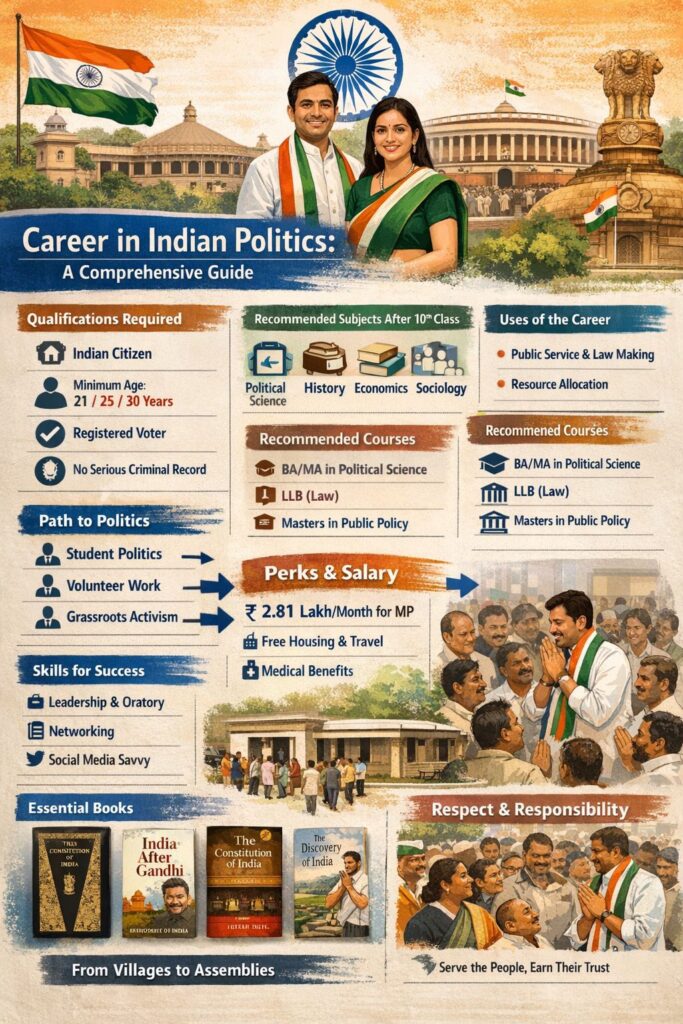
Legally, the Indian Constitution sets minimal requirements:
Citizenship: Must be a citizen of India.
Age: * 21 years for local bodies (Panchayats/Municipalities).
25 years for Lok Sabha and State Legislative Assemblies.
30 years for Rajya Sabha and Legislative Councils.
Voter Status: Must be a registered voter.
Criminal Record: Must not have been convicted of certain offenses (as per the Representation of the People Act).
3. Best Subjects After 10th for Political Aspirants:
Although students from any stream can enter politics, the Arts/Humanities stream provides the strongest foundation.
Subjects like Political Science help understand governance and constitutional law.
History builds awareness of India’s political evolution.
Economics is essential for policy-making and budget analysis.
Sociology develops insight into India’s diverse social structure.
4. Uses and Importance of a Political Career:
Politics enables individuals to directly serve society.
Politicians work to solve public problems, improve infrastructure, and ensure welfare schemes reach citizens.
They participate in law-making, shaping the country’s future.
They also play a critical role in allocating public resources for development.
5. Recommended Courses for Aspiring Politicians:
While no degree is compulsory, certain courses enhance credibility and competence.
Degrees such as BA/MA in Political Science, LLB (Law), Masters in Public Policy (MPP), Journalism, or Economics help in understanding governance, law, and public communication.
Many legendary Indian leaders, including Mahatma Gandhi and Dr. B.R. Ambedkar, had a legal background.
6. Top Colleges for Political Aspirants in India:
Institutions with strong political and social exposure include Jawaharlal Nehru University (JNU), University of Delhi (DU), National Law Universities, TISS Mumbai, and IIMs offering Public Policy programs.
These colleges encourage debate, leadership, and activism.
7. Time Required to Succeed in Politics:
Formal education may take 3–5 years for graduation and 2 years for post-graduation.
However, the real “political degree” comes from 5–10 years of grassroots work, public engagement, and party service.
8. Career Growth & Entry into Politics:
There are no campus placements in politics.
Most leaders begin with student politics (ABVP, NSUI, SFI), work as party volunteers, or engage in NGO and social activism. Recognition grows through consistent public service.
9. Salary of Politicians in India (2025):
An MP earns approximately ₹2.81 lakh per month, including salary and allowances.
MLA salaries vary by state, with some states offering over ₹2 lakh per month including benefits.
Politicians receive government housing, free or subsidized travel, CGHS healthcare, and utility allowances like electricity and water (as per rules).
10. Work Pressure & Stress Management:
Politics is a 24×7 profession.
Successful leaders manage pressure through delegation, structured public grievance systems like Janata Darbars, and strong support teams.
11. Work Environment of a Politician :
A politician’s work environment is highly dynamic, unpredictable, and people-centric. Unlike office-based jobs, there is no fixed workplace or fixed timing. One day may begin in a government secretariat or legislative assembly, while the next day may involve traveling through remote villages, slums, or urban neighborhoods to address public grievances.
The work environment is socially intensive, as politicians interact daily with hundreds or even thousands of citizens, party workers, officials, media personnel, and pressure groups. From attending public meetings, inaugurations, and protests to resolving local disputes, the role demands constant face-to-face engagement with people from all sections of society.
Politicians also operate in a high-pressure and high-responsibility atmosphere. Decisions taken in offices or assemblies directly impact public welfare, development projects, and law enforcement. Alongside public interaction, they must regularly coordinate with bureaucrats, police, district administration, and government departments, often under tight deadlines.
12. Leadership Skills Required for a Politician :
Leadership is the backbone of a successful political career. A politician is not only a representative but also a decision-maker, problem-solver, and visionary for thousands of people. One of the most important leadership skills is strong decision-making ability. Politicians often face situations where multiple groups have conflicting demands, and choosing a balanced solution that serves the larger public interest requires courage, clarity, and accountability.
Another crucial skill is visionary thinking. Effective leaders do not work only for short-term popularity; they plan for the next 10–20 years of their constituency. Whether it is infrastructure development, education, healthcare, or employment, a politician must have a clear roadmap for sustainable growth and social welfare.
13. Communication Skills for Political Success :
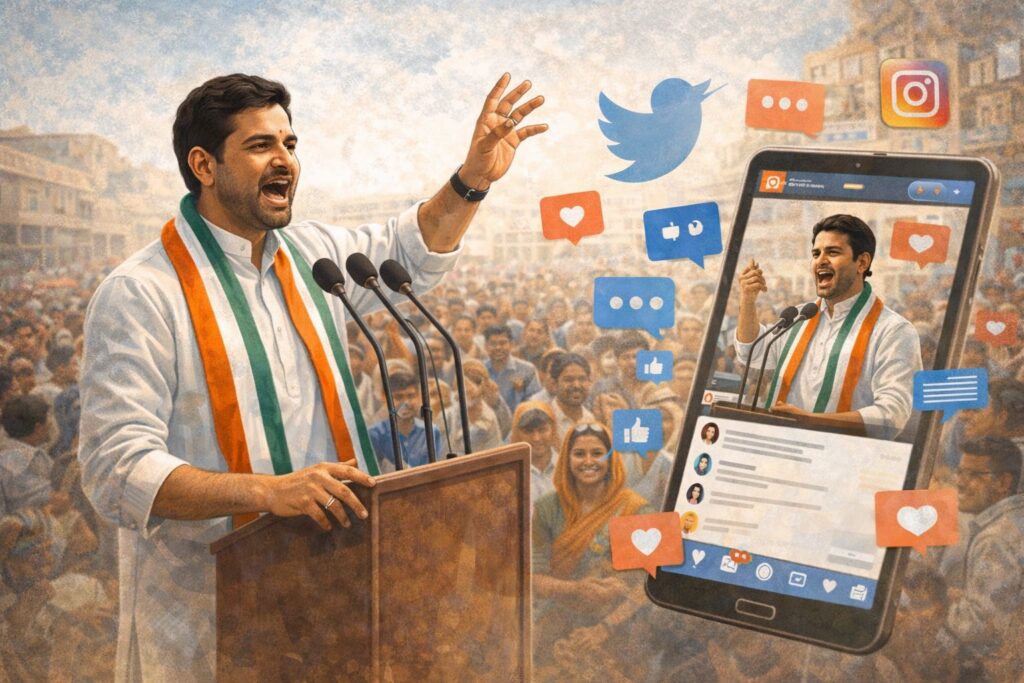
Communication is one of the most powerful tools in politics. A politician’s success largely depends on how effectively they express ideas, connect with people, and build trust. One of the most important communication skills is oratory and public speaking. The ability to deliver clear, confident, and emotionally engaging speeches helps leaders inspire crowds, explain policies, and mobilize public support during rallies, assemblies, and public meetings.
Equally important is active listening. A successful politician does not only speak but also listens carefully to the concerns, complaints, and suggestions of citizens. Whether during Janata Darbars, door-to-door visits, or informal interactions, listening patiently helps leaders understand the real issues on the ground and respond with practical solutions.
Language adaptability and clarity are crucial in a diverse country like India. Politicians must communicate in simple, local, and relatable language so that people from different educational and social backgrounds can understand them easily. Using regional languages, avoiding complex jargon, and explaining policies in everyday terms strengthens public connection.
14. Daily Study Routine for Political Aspirants
A disciplined routine includes newspaper reading, public discussions, news analysis, and studying constitutional or political theory regularly.
15. Must-Read Books for Political Aspirants
Books like The Constitution of India, India After Gandhi, and The Discovery of India provide deep political and historical insight.
16. Best Training Institutes for Politics
Institutions like Indian School of Democracy (ISD), MIT-SOG Pune, and YLAC offer leadership and policy training for aspiring politicians.
17. Best Coaching/Training
Indian School of Democracy (ISD): Offers short-term programs for aspiring leaders.
MIT-SOG (School of Government), Pune: Specifically trains people for a career in politics.
YLAC (Young Leaders for Active Citizenship): Policy and leadership programs.
18. Social Respect
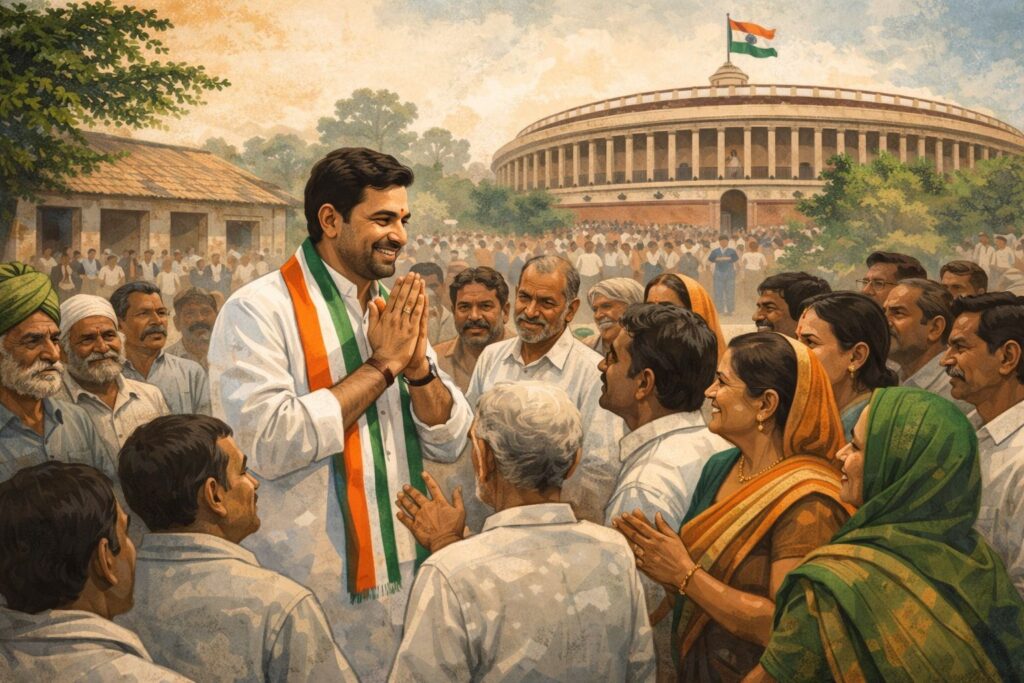
Social respect is one of the most powerful yet challenging outcomes of a political career. In India, politics is often viewed with mixed opinions; however, a dedicated, honest, and people-centric politician gradually earns deep and lasting respect in society. When a leader consistently works for public welfare—such as improving roads, schools, hospitals, water supply, or employment opportunities—people begin to see them not just as a representative but as a guardian and problem-solver of the community.
Social respect also comes from accessibility and empathy. Leaders who remain approachable, listen patiently, and stand with people during crises—such as natural disasters, unemployment issues, or law-and-order problems—build strong emotional bonds. Such politicians are remembered not for their speeches, but for their presence and support during difficult times.
Over time, a politician’s actions create a long-term social impact that goes far beyond election cycles. Policies implemented, development projects initiated, and institutions strengthened continue to benefit future generations. A single decision, like opening a college, health center, or irrigation project, can transform the economic and social condition of an entire region for decades.
Politicians with a clean image and ethical conduct often become role models for youth and sources of inspiration for aspiring leaders. Their reputation can extend beyond politics into education, social reform, and national recognition. In many cases, respected leaders continue to influence society even after retirement, through mentorship, advisory roles, or social initiatives.
Becoming a Politician in India: Frequently Asked Questions?
Q1. Is a degree required to become a politician in India?
👉A: No. There is no mandatory educational qualification required to become a politician in India. However, degrees in Political Science, Law, Public Policy, or Economics can help in better understanding governance and policymaking.
Q2. What is the minimum age to start a political career in India?
👉A: The minimum age is 21 years for local body elections (Panchayat/Municipality), 25 years for Lok Sabha and State Legislative Assemblies, and 30 years for Rajya Sabha and Legislative Councils.
Q3. Can an ordinary citizen become successful in politics?
👉A: Yes. Indian democracy allows any ordinary citizen to enter politics. With dedication, grassroots work, public support, and integrity, anyone can build a successful political career.
Q4. How can one start a career in politics?
👉A: One can begin through student politics, by joining a political party as a volunteer, or by working with NGOs and social organizations. Grassroots involvement is the key to growth in politics.
Q5. Is money necessary to succeed in politics?
👉A: While money can play a role, public support, credibility, and organizational strength are far more important. Many leaders have succeeded with limited financial resources.
Q6. Is politics a secure career option?
👉A: Politics is a high-risk, high-reward career. There is no fixed job security, but strong public trust and consistent performance can provide long-term stability and influence.
Q7. What is the salary of an MLA and an MP in India?
👉A: An MP earns approximately ₹2.81 lakh per month, including salary and allowances.
The salary of an MLA varies by state, with several states offering over ₹2 lakh per month including benefits.
Q8. Are there opportunities for women in Indian politics?
👉A: Yes. India provides reservations and increasing opportunities for women in local bodies and legislatures. Women participation in Indian politics is steadily growing.
Q9. How does a politician earn social respect?
👉A: Social respect is earned through honest leadership, accessibility, public service, and consistent development work, not merely by holding a political position.
Q10. How long does it take to become a successful politician?
👉A: There is no fixed timeline. Generally, 5–10 years of grassroots work is required to gain public trust and electoral success, though this may vary by individual.
- For more updates, stay connected with www.sarkarimission.in